

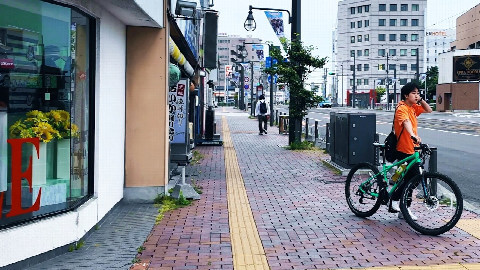
Morning Hakodate evokes a strange, almost mystical feeling. It has everything that should belong to a big city: wide avenues, trams, massive warehouses by the water. And yet I walk down the street – and there's no one around. The city seems empty, and only the rhythmic electronic chirping of the traffic lights suggests it isn't abandoned.
Once in a while this silence is cut by the strained rumble of an old tram. When it passes by, it feels as if you've been thrown back fifty years. A single passenger gets off an arriving bus at an empty stop. And again, no movement.
For cramped, ever-hurrying Japan, this unfilled space feels almost unnaturally open. Between the buildings, the occasional passersby and the cars, there seems to be far too much air left over.
The unusual appearance of Hakodate emerged from several histories layered one upon another.
It began with the port. In the mid-19th century, Hakodate was one of the first places in Japan opened to foreign ships and trade. Along with them came consulates, churches, Western-style houses, and an urban scale quite different from anything else in Japan at the time. This explains the strange feeling you get in the old quarters at the foot of the mountain – as if they grew up somewhere between Japan and a European port city.
Then came the fires. Strong winds off the strait fanned the flames, and after the largest fires the streets were widened and straightened, turned into firebreaks. That is why part of the city still feels unusually spacious today.
In the 20th century, this spaciousness proved very useful. Hakodate became the most important gateway to Hokkaido — people, cargo and railway cars from Honshu passed through its port and rail ferries. The city grew, the port worked at full capacity, warehouses filled up, and the trams and streets served a completely different flow of people.
Then that flow began to fade. In 1988 the Seikan Tunnel opened, the railway ferries stopped running, and Hakodate's former role as a transport hub gradually diminished. But the avenues, the port, the warehouses and the old infrastructure remained.
Perhaps that is why Hakodate is so striking today, why it makes you stop and look. It has kept the spatial scale of a great port city, but now lives at a much quieter pace.