

A Station Made of Wood
In Tokyo, a railway station is almost always a functional hub of concrete and steel. But not here. Togoshi-Ginza Station, on the local Ikegami Line, looks as if it were designed outside the usual norms. The original wooden station building, built in 1927, had fallen into serious disrepair over nine decades. When renovating it, the engineers at Tokyu Corporation chose to forgo conventional materials in favor of wood. The platforms were covered with a structure made of dark Tokyo cedar – sugi, grown in the forests of the Tama district. A special roof design made it possible to do without bulky supports, keeping the platform open and uncluttered.
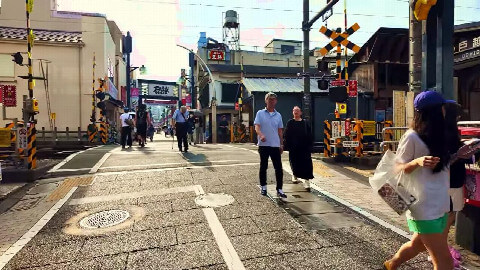
There are no stairs or escalators here: from the doors of the short three-car train to the ticket gate and the asphalt of the shopping street, it's exactly ten steps, all on one level. This layout has its own quirk, though. The platforms for opposite directions aren't connected inside the station, so if you enter from the wrong side, you have to go back out, wait for the barrier at the level crossing to lift, and cross the tracks on the pedestrian walkway along with everyone else.
In Tokyo, ground-level railway crossings are gradually disappearing, but here the station was preserved and improved instead. Cedar absorbs the rumble of passing trains well, darkens with sunlight over time, and ages alongside the neighborhood itself. Even the old beams removed during the renovation were kept – they were cut up and distributed to school workshops throughout Shinagawa. As a result, the station stopped being merely a transit space and came to feel almost like the veranda of a shared home.
A Straight Line
The nearly perfect straight line of Togoshi Ginza wasn't drawn up on a drafting table. The street follows the bottom of a long natural hollow where water once flowed, with rice paddies lying on either side. During the Taisho era, this area began to be reshaped for the growing city: the watercourse was straightened, the land was replotted, and roads appeared. Later the water was hidden underground, but its line remained on the surface.
There's an older story here too – the very name Togoshi is linked to the phrase "beyond Edo." A traveler leaving the old city heading south would cross this low-lying area and find himself already on the far side of the capital. It's hard to say how literally to take this legend, but it fits the place remarkably well – somewhere that for centuries lay at the edge of the great city and later found itself almost at its center.
Today it's easy to miss the old valley. Houses crowd close to the street, the water has vanished from sight, and the rice paddies became residential blocks long ago. And yet the terrain still shapes things: Togoshi Ginza remains a long, nearly level strip along which the life of the surrounding neighborhoods naturally gathers.
A strange thing emerges: the city has changed almost everything here except the direction. The river is gone, the boundary of Edo has dissolved, and Tokyo has grown up all around – yet the street still runs along that same straight line.