

From Hakata to Fukuoka in One Step, or Fly into Fukuoka, Leave from Hakata
Imagine a city with a split personality. It has two names, and behind each lies its own history, its own traditions, and several centuries of rivalry. Welcome to the north of Japan's Kyushu island.
It all began in 1600, when the ambitious samurai Kuroda Nagamasa was awarded these lands for his victory in the decisive Battle of Sekigahara. By that time, the ancient, wealthy, and immeasurably proud merchant town of Hakata was already bustling on the eastern bank of the river. Sharing one bank with merchants seemed to the status-conscious military commander an inappropriate step for his martial reputation. He crossed the river, built an impregnable castle on the western bank, and named his new settlement Fukuoka – after his family's ancestral lands in Okayama Prefecture.
The two banks immediately became irreconcilable rivals. On one side – the ruling samurai class, on the other – enterprising capital. They even spoke different dialects: on the samurai bank, the restrained Fukuoka-ben was practiced, while among the merchants the brisk Hakata-ben was in use. The latter, incidentally, outlived its rival and can still be heard throughout the city today.
In 1889 the two towns were merged. All that remained was a trifling matter – what to call the new city. And this is where things got interesting. At the decisive vote, the samurai took advantage of their numerical majority in the assembly, reinforced by a classic political intrigue: they locked some of the merchant delegates in the restroom right before the vote count. The city was officially named Fukuoka, but the slighted merchants of Hakata harbored a serious grudge.
Their moment came later. When it was time to lay a railway through the prefecture, the authorities faced a difficult choice: either leave the region on the sidelines of progress, or borrow money from the wealthy merchant class. The merchants offered both the best land and generous funding, but required the authorities to name the central station Hakata. The officials, whose treasury was, as usual, empty, had no arguments against gold bars.
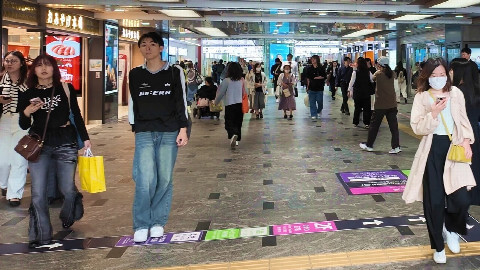
Passions eventually cooled, but both names remained. You buy a plane ticket to Fukuoka Airport, land, eat a bowl of tonkotsu ramen, and head to Hakata Station. Here two Shinkansen lines diverge: the Sanyo line will carry you through Osaka and Tokyo far to the north, while the Kyushu line heads to the very south, through Kumamoto to Kagoshima. In short, no matter where you fly into Fukuoka from, you will definitely leave from Hakata.